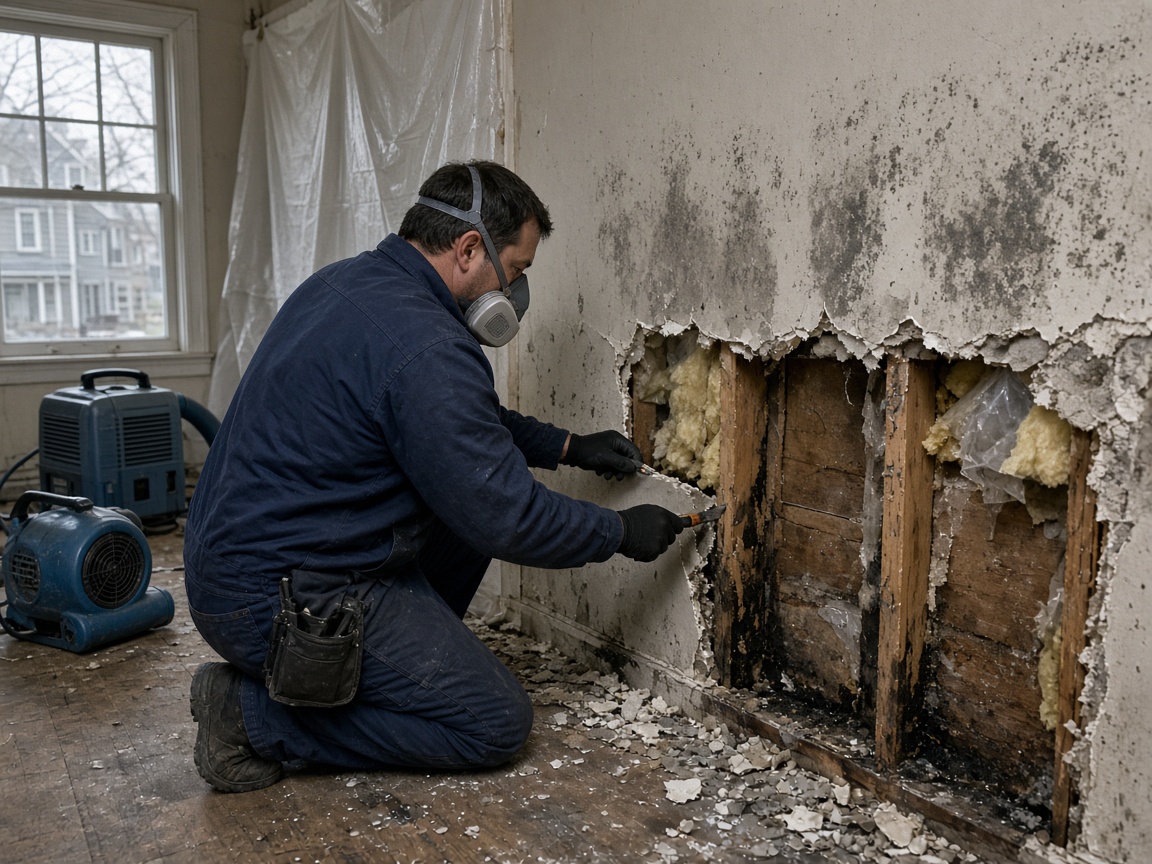
Worcester's older housing stock in neighborhoods like Main South and Quinsigamond Village often features plaster walls and knob-and-tube wiring that trap moisture after a leak. Cold winters with humid continental swings cause pipes to burst in unheated basements and attics, especially in Greendale and Burncoat properties built before 1950. Repair work here requires pulling wet insulation without disturbing lead paint or asbestos common in these homes, then drying to below 12 percent moisture content before refinishing.
Flooding from heavy summer rains or snowmelt runoff hits low-lying areas near the Ecotarium and along the Blackstone River corridor. Technicians must account for clay-heavy soils that hold water and push it back into foundations. In these cases, repair includes installing French drains tied to sump systems rather than simple surface cleanup, and coordinating with Worcester building codes on vapor barriers in finished basements.
Water intrusion near Union Station or along rail lines frequently affects commercial spaces with concrete slab floors. Hidden moisture migrates under tile and hardwood, leading to cupping or mold weeks later. Proper repair involves thermal imaging scans followed by targeted slab drying and subfloor replacement, avoiding the widespread demolition that raises costs in mixed-use buildings.
Nearby Shrewsbury and Auburn residents often call for cross-town jobs when their homes share Worcester's aging municipal water mains. Seasonal freeze-thaw cycles stress supply lines running under driveways, creating slow leaks that saturate crawl spaces. Repair protocols emphasize isolating the source first, then using negative-air machines to prevent spore spread into living areas during demolition.
Technician insight
In Worcester the thing that catches most people out with water damage repair is how quickly moisture travels through balloon-framed walls in pre-1940 homes around Burncoat and Main South. A small second-floor leak can soak insulation all the way to the basement before anyone notices, and the clay soil keeps everything wet longer than you'd expect after a winter pipe burst.
Pipe Burst in Burncoat Two-Story
A homeowner in Burncoat noticed ceiling stains after a January freeze. Inspection found a burst supply line feeding an upstairs bath that had soaked plaster walls and floor joists. Crew extracted water, dried the cavities over four days, removed damaged plaster, and replaced insulation before patching and painting to match the original finish.
Water Damage Repair Services We Offer
✓Pipe Burst Repair and Drying
Locate and replace frozen or corroded supply lines in older Worcester homes, then extract standing water and dry wall cavities to prevent hidden mold growth.
✓Basement Water Extraction
Remove groundwater and rainwater from below-grade spaces common in Main South and Burncoat, followed by dehumidification and antimicrobial treatment of concrete.
✓Ceiling and Wall Restoration
Cut out saturated plaster or drywall in Greendale and Downtown Worcester properties, treat framing, and reinstall with moisture-resistant materials suited to humid summers.
✓Crawl Space Moisture Control
Address slow leaks under Quinsigamond Village homes by sealing dirt floors, installing vapor barriers, and adding ventilation to stop recurring dampness.
✓Hardwood Floor Repair
Lift and replace cupped or stained oak and pine flooring after leaks, sanding and refinishing to match existing grain in historic Worcester residences.
Water Damage Repair Cost in Worcester, MA
| Service | Typical Range | What Affects It |
|---|---|---|
| Initial inspection and moisture mapping | Free | Includes written scope for Worcester homes |
| Water extraction and drying | $800–$2,200 | Depends on square footage and depth of saturation |
| Drywall and insulation replacement | $1,200–$3,500 | Varies with wall height and older plaster vs drywall |
| Hardwood floor repair | $1,500–$4,000 | Based on room size and species of existing flooring |
Ranges are typical for Worcester, MA and confirmed with an exact written quote before any work starts.
How it works
- 1
On-Site Assessment
Technician arrives from 10 Pullman St, maps moisture with meters, and identifies affected materials in the specific neighborhood.
- 2
Water Removal
Extract standing water using truck-mounted pumps and portable extractors suited to basement or slab conditions.
- 3
Drying And Monitoring
Place air movers and dehumidifiers, then check daily moisture readings until levels stabilize below industry thresholds.
- 4
Repair And Restoration
Replace damaged drywall, insulation, or flooring and apply finishes matched to the home's age and style.
Pricing
Upfront written quotes after inspection, priced by scope and materials affected.