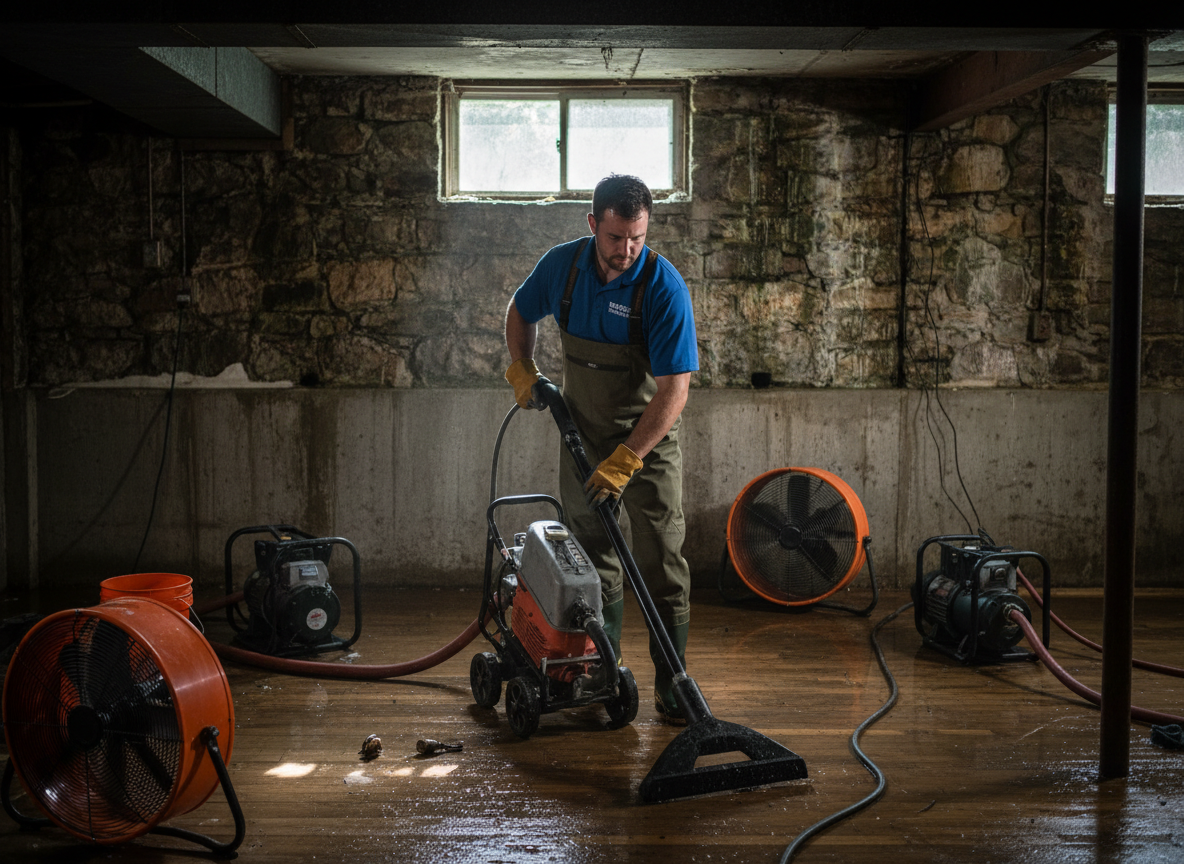
Worcester's older housing stock, especially pre-1950 homes in Burncoat and Greendale, often features galvanized piping and knob-and-tube wiring that fails during the first hard freeze of a humid continental winter. When a pipe bursts at 2 a.m., water travels quickly through balloon-framed walls and into horsehair plaster, creating hidden pockets that standard fans miss. Technicians must open walls at multiple elevations and use moisture meters calibrated for masonry and lath to prevent mold growth that thrives once warm summer humidity returns.
Summer thunderstorms and rapid snowmelt from nearby Auburn and Shrewsbury hills send water into low-lying basements along the Blackstone River corridor and Quinsigamond Village. Clay-heavy soils around the Ecotarium and Union Station areas hold moisture against foundations for weeks, so extraction alone is never enough. Crews install temporary French drains and negative-air machines to keep airborne spores from migrating into finished spaces on upper floors.
Historic districts near the Worcester Art Museum and Higgins Armory Museum require extra care because many structures lack modern vapor barriers. Removing water from these buildings means documenting every step for insurance adjusters while protecting original woodwork and avoiding any work that could trigger code violations during later renovations. Skipping this documentation often leads to denied claims when owners later sell.
Technician insight
In Worcester, the thing that catches most people out with Emergency Water Damage Restoration is how quickly water travels through the balloon-framed walls of 1920s–1940s homes in Burncoat and Greendale once a pipe freezes; the moisture hides behind plaster for weeks and only shows up after the first warm humid spell.
Frozen Pipe In Quinsigamond Village
A homeowner in Quinsigamond Village called after a cold snap caused a second-floor supply line to split. Water had wicked down through two stories of plaster and pooled against the foundation slab. Crews opened walls at three elevations, extracted water, and ran drying equipment for six days until readings returned to normal. No mold developed and the owner avoided a full gut renovation.
Emergency Water Damage Restoration Services We Offer
✓Burst Pipe Water Extraction
Locate and isolate the break, remove standing water, and dry wall cavities in older Worcester homes before mold sets in.
✓Flooded Basement Cleanup
Pump out groundwater and river-adjacent flooding common in Quinsigamond Village and Main South, then treat for contaminants.
✓Ice Dam Water Removal
Address roof leaks from winter ice dams that affect Greendale and Burncoat homes during the freeze-thaw cycles typical of Worcester winters.
✓Sewage Backup Restoration
Safely extract and disinfect Category 3 water from aging sewer lines that back up after heavy rains near Downtown Worcester.
✓Structural Drying for Historic Homes
Use targeted drying equipment on plaster and timber-frame buildings around the Worcester Art Museum without damaging original finishes.
Emergency Water Damage Restoration Cost in Worcester, MA
| Service | Typical Range | What Affects It |
|---|---|---|
| Initial Assessment And Documentation | Free | Includes moisture readings for homes in Worcester neighborhoods |
| Water Extraction | $400–$900 | Varies by volume and whether sewage is present |
| Equipment Drying (Per Week) | $600–$1,200 | Based on square footage and number of rooms |
| Plaster And Drywall Removal | $300–$750 | Higher in historic Burncoat and Greendale homes |
Ranges are typical for Worcester, MA and confirmed with an exact written quote before any work starts.
How it works
- 1
On-Site Assessment
Technician arrives, maps moisture with meters, identifies the water source, and documents affected materials in the specific neighborhood.
- 2
Water Extraction
Remove standing water with submersible pumps and truck-mounted vacuums, focusing on hidden voids in older Worcester construction.
- 3
Drying And Dehumidification
Place air movers and dehumidifiers, monitor daily readings, and adjust equipment as humidity levels change with the season.
- 4
Restoration And Repairs
Replace damaged drywall, flooring, and insulation, then coordinate with local trades for any electrical or plumbing follow-up.
Pricing
Upfront written quotes after inspection; final cost depends on water category, affected square footage, and hidden damage discovered during drying.