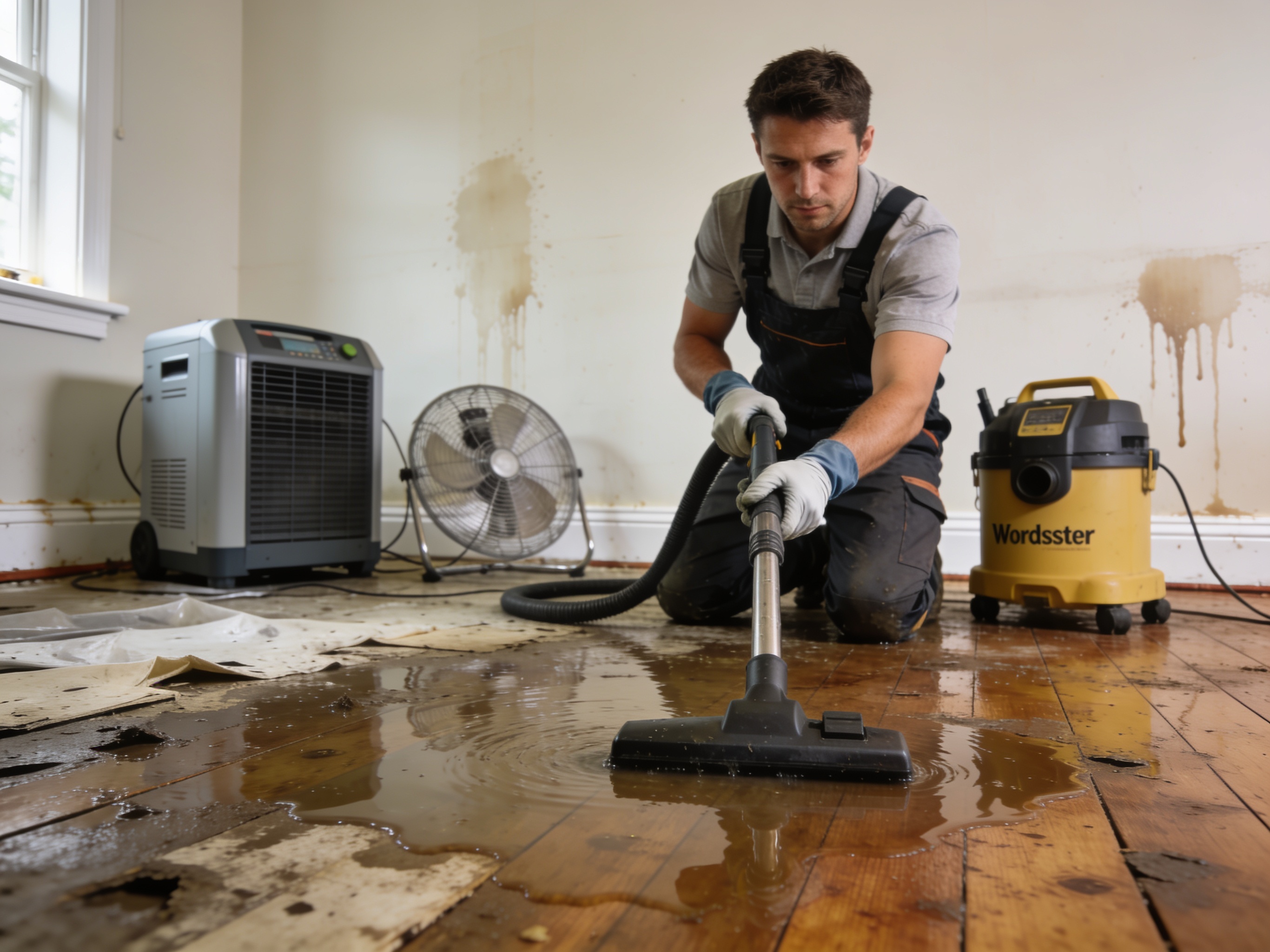
Worcester's humid continental climate brings cold winters that freeze pipes in older housing stock across Main South and Burncoat, leading to sudden thaws that send water into basements and crawl spaces. We extract standing water, then use industrial dehumidifiers to pull moisture from plaster, lath and brick foundations that retain dampness longer than newer builds in Shrewsbury or Auburn. Hidden pockets behind wainscoting or under hardwood floors often require targeted demolition to prevent mold on the porous materials common in pre-1950 homes.
Quinsigamond Village and Greendale sit on terrain that funnels runoff toward lower lots during heavy spring rains, saturating slab-on-grade homes and forcing water into electrical boxes and HVAC returns. Our crews map moisture with infrared meters before cutting drywall at the correct height to avoid structural compromise. Union Station-area commercial buildings add another layer where we must coordinate with city codes on historic facades while still removing saturated insulation from walls.
After extraction we place air movers and HEPA filtration to keep dust from spreading into unaffected rooms, then document every step for insurance adjusters who visit properties near the Worcester Art Museum or Ecotarium. Final drying verification uses pin meters on joists and subfloors before any reconstruction begins, because residual moisture in Worcester's clay-heavy soils can wick back up through foundations weeks later.
Technician insight
In Worcester the thing that catches most people out with Flood Damage Restoration is how quickly water travels through the balloon-framed walls of 1920s–1940s homes in Burncoat and Greendale once a pipe bursts during a January thaw; the moisture hides in the plaster keys and travels upward two stories before anyone notices.
Winter Pipe Burst in Main South
A frozen supply line thawed and flooded a finished basement in a 1930s triple-decker. We extracted water, mapped moisture that had wicked into the first-floor subfloor, and dried the structure over five days before any finishes were replaced.
Flood Damage Restoration Services We Offer
✓Basement Flood Extraction
Remove standing water from cellars in older Worcester homes using submersible pumps sized for the volume typical after winter pipe bursts.
✓Structural Drying and Dehumidification
Deploy commercial dehumidifiers and air movers to dry plaster, brick and hardwood floors common in Main South and Downtown Worcester properties.
✓Sewage Contaminated Water Cleanup
Handle Category 3 water from backups with full PPE protocols and disposal methods that meet Worcester County health requirements.
✓Mold Prevention After Flooding
Apply antimicrobial treatments and remove saturated materials before mold colonies form in humid summer conditions following spring floods.
✓Content Drying and Packout
Move and dry furniture, rugs and documents from flood-affected rooms in Greendale and Quinsigamond Village homes to prevent secondary damage.
Flood Damage Restoration Cost in Worcester, MA
| Service | Typical Range | What Affects It |
|---|---|---|
| Initial Assessment | Free | During listed business hours from 10 Pullman St |
| Basement Extraction | $800–$2,200 | Varies with square footage and water depth |
| Full Structural Drying | $1,200–$3,500 | Number of rooms and equipment runtime |
| Sewage Cleanup Add-On | $600–$1,800 | Required PPE and disposal fees |
Ranges are typical for Worcester, MA and confirmed with an exact written quote before any work starts.
How it works
- 1
On-Site Assessment
Inspect water source, affected materials and moisture migration paths through the specific construction found in Worcester neighborhoods.
- 2
Water Extraction
Remove standing and trapped water with pumps and wands before it saturates more of the structure.
- 3
Drying And Monitoring
Set equipment and track moisture levels daily until readings return to normal for the building materials present.
- 4
Sanitization And Reconstruction
Treat surfaces and replace damaged drywall, flooring or insulation to restore the space.
Pricing
Costs depend on water volume, depth of saturation and whether Category 3 contaminants are present.