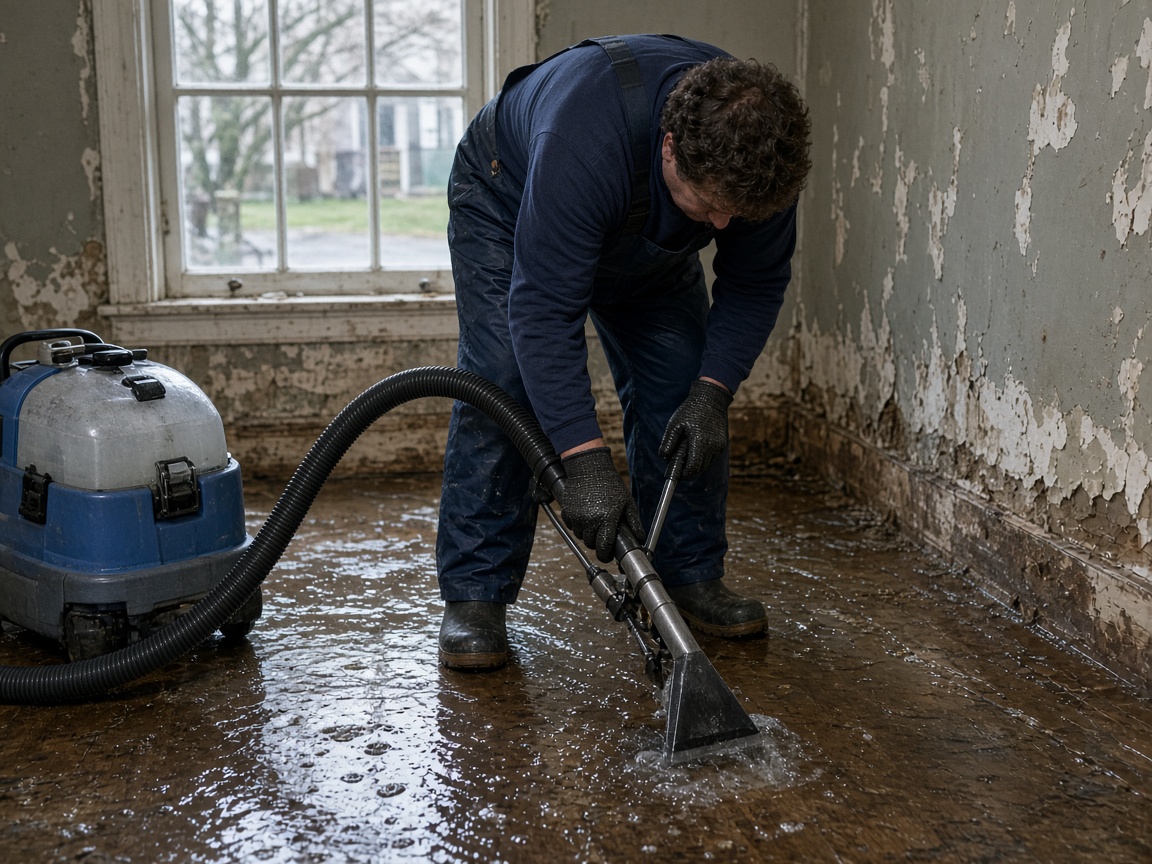
Worcester's older housing stock, especially pre-war homes in Burncoat and Downtown Worcester, often features lath-and-plaster walls and unfinished basements that trap water against foundation walls after pipe bursts during cold snaps. Extraction crews must remove baseboards and drill weep holes to pull moisture from cavities before humidity from warm summers allows mold to take hold on wood framing. Properties near the Blackstone River or low spots in Quinsigamond Village see groundwater seepage that requires subfloor removal and disposal of saturated insulation.
Cold winters bring frequent supply-line freezes in Greendale and Main South, where water can migrate under hardwood floors and into joist bays. Technicians use truck-mounted extraction units to pull standing water first, then address hidden pockets with moisture meters because residual dampness in brick foundations common to Worcester County homes will wick upward and damage drywall once temperatures rise. Nearby Shrewsbury and Auburn jobs often involve similar clay-soil drainage issues that slow natural drying.
After extraction, crews focus on structural drying with air movers and dehumidifiers sized for the square footage, checking daily because Worcester's humid continental summers keep ambient moisture high. Edge cases include sewage backups in older sewer lines under Union Station-area buildings, where contaminated water demands separate containment and disposal protocols. Skipping these steps leads to recurring odors and failed insurance claims.
Technician insight
In Worcester, the thing that catches most people out with water extraction is how quickly moisture travels behind plaster in 1920s–1940s homes in Burncoat and Greendale during winter freezes—homeowners often stop at visible puddles and miss the joist bays that stay wet through humid summers.
Greendale Pipe Burst Extraction
A frozen supply line in a 1930s Greendale home sent water under the kitchen floor and into the basement. We located the migration path behind plaster, extracted standing water, opened wall cavities, and ran drying equipment for four days until readings stabilized.
Water Extraction Services Services We Offer
✓Emergency Water Extraction
Rapid removal of standing water from sudden pipe bursts or appliance failures in residential properties across Worcester neighborhoods.
✓Basement Water Extraction
Targeted pumping and drying of flooded basements common in older Greendale and Burncoat homes with poor foundation drainage.
✓Crawl Space Water Removal
Extraction from low-access crawl spaces under Main South and Quinsigamond Village homes where moisture lingers against sill plates.
✓Carpet and Pad Extraction
Pulling water from saturated carpet and padding to prevent mold growth in humid Worcester summers after leaks or storms.
✓Post-Storm Water Extraction
Removal of rainwater that enters through roofs or windows in properties near the Ecotarium or Higgins Armory Museum areas.
Water Extraction Services Cost in Worcester, MA
| Service | Typical Range | What Affects It |
|---|---|---|
| Small residential extraction | $400–$800 | One room or limited basement area; rises with hidden wall moisture |
| Full basement extraction | $900–$1800 | Includes multiple rooms and subfloor work in older Worcester homes |
| Crawl space extraction | $600–$1200 | Tight access and insulation removal increase time |
| Carpet and pad extraction | $250–$500 | Per room; disposal fees apply for water-damaged materials |
Ranges are typical for Worcester, MA and confirmed with an exact written quote before any work starts.
How it works
- 1
On-Site Assessment
Technician inspects water source, measures affected square footage, and checks moisture levels in walls and floors using meters.
- 2
Standing Water Removal
Truck-mounted pumps extract bulk water from floors and basements before it migrates further into Worcester home structures.
- 3
Hidden Moisture Extraction
Baseboards are pulled and cavities are addressed with specialized tools to reach water trapped in plaster or subfloors.
- 4
Drying And Monitoring
Equipment is placed and daily readings track progress until materials reach safe moisture content for the local climate.
Pricing
Upfront quotes after inspection; final cost depends on water volume, access difficulty, and materials affected.