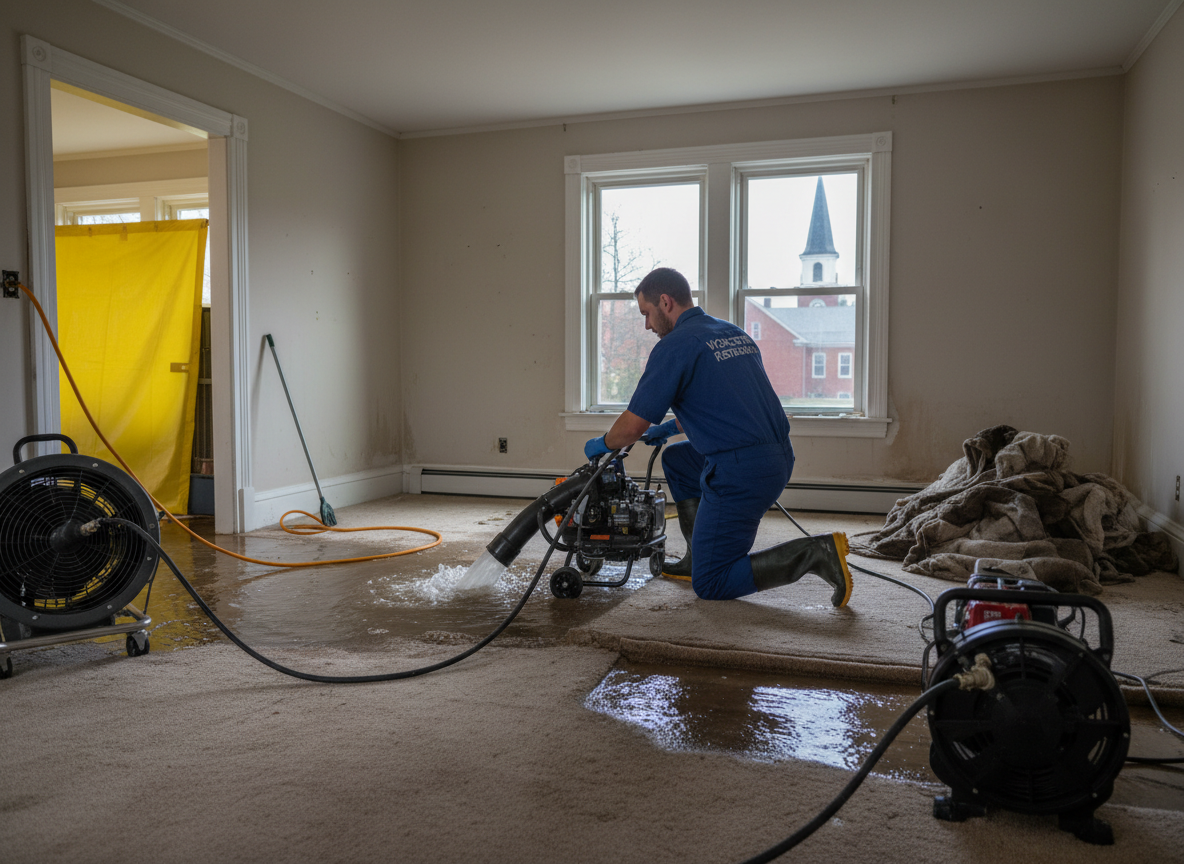
Worcester's humid continental climate brings cold winters that freeze pipes in 1920s–1950s homes common in Main South and Greendale. When those lines burst, water travels behind plaster and into balloon-framed walls, requiring moisture meters and targeted demolition rather than surface drying. Crews at 10 Pullman St respond within hours because trapped moisture quickly leads to hidden mold in unventilated attics.
Summer humidity in the 70–80 percent range slows evaporation in Quinsigamond Village and Burncoat basements, especially on clay-heavy soil that holds water against foundations. Technicians use industrial air movers and dehumidifiers sized for the square footage, then monitor daily readings until drywall and subfloors reach manufacturer-specified moisture content. Skipping this step leaves residual dampness that warps hardwood floors installed over concrete slabs.
Nearby Shrewsbury and Auburn share the same older housing stock and drainage challenges, so crews often cross county lines for jobs where sump pump failures coincide with heavy rain. Every project includes documentation of pre-existing conditions and photos of affected materials so homeowners can show insurers exactly what was damaged versus normal wear.
Technician insight
In Worcester, the thing that catches most people out with Residential Water Damage Restoration is water that travels under the wide oak floorboards in 1920s–1940s homes in Greendale and Burncoat. Winters freeze pipes, water sits against the subfloor for days, and by the time homeowners notice, the damage has already reached the joists because the clay soil keeps everything damp longer than newer construction.
Quinsigamond Village Pipe Burst
A supply line froze and split in a 1948 two-story home during a January cold snap. Water ran behind the kitchen wall and into the basement, soaking plaster and the oak subfloor. Crews extracted standing water, opened the wall cavity, and ran drying equipment for four days until readings hit acceptable levels. The homeowner avoided mold growth and returned to normal use without full kitchen replacement.
Residential Water Damage Restoration Services We Offer
✓Burst Pipe Water Extraction
Removes standing water from older Worcester homes after frozen supply lines break, then isolates the leak source in plaster walls common in Main South.
✓Basement Drying After Sump Failure
Dries clay-soil basements in Burncoat and Greendale when power outages or pump breakdowns allow groundwater to enter during summer storms.
✓Attic Leak Restoration
Addresses roof ice-dam and flashing leaks that soak insulation and ceiling joists in 1930s–1960s homes throughout Downtown Worcester.
✓Kitchen and Bath Water Damage Repair
Extracts water from subfloors and cabinets after appliance failures or supply-line leaks, preventing delamination in older oak and pine flooring.
✓Carpet and Pad Removal
Removes saturated carpet and padding in high-humidity conditions so underlying hardwood or concrete can dry without mold growth.
Residential Water Damage Restoration Cost in Worcester, MA
| Service | Typical Range | What Affects It |
|---|---|---|
| Initial Assessment | $0–$150 | Often waived when extraction work is authorized same day |
| Water Extraction | $400–$900 | Varies with depth of water and number of rooms |
| Drying Equipment Rental | $300–$800 | Daily rate; length depends on humidity and material porosity |
| Hidden Wall Cavity Drying | $250–$600 | Requires small access holes in plaster common in older Worcester homes |
| Final Moisture Verification | $100–$200 | Includes written report for insurance |
Ranges are typical for Worcester, MA and confirmed with an exact written quote before any work starts.
How it works
- 1
On-Site Assessment
Technician inspects all affected rooms with moisture meters, notes water source, and documents damage for insurance.
- 2
Water Removal
Pumps and extractors remove standing water from basements and floors before drying begins.
- 3
Drying And Monitoring
Air movers and dehumidifiers run until readings confirm drywall, joists, and subfloors are dry.
- 4
Sanitizing And Restoration
Antimicrobial treatment applied, then minor repairs such as drywall patches and floor resets completed.
Pricing
Most residential jobs range from several hundred to a few thousand dollars depending on water volume, affected square footage, and whether hidden wall cavities require opening.