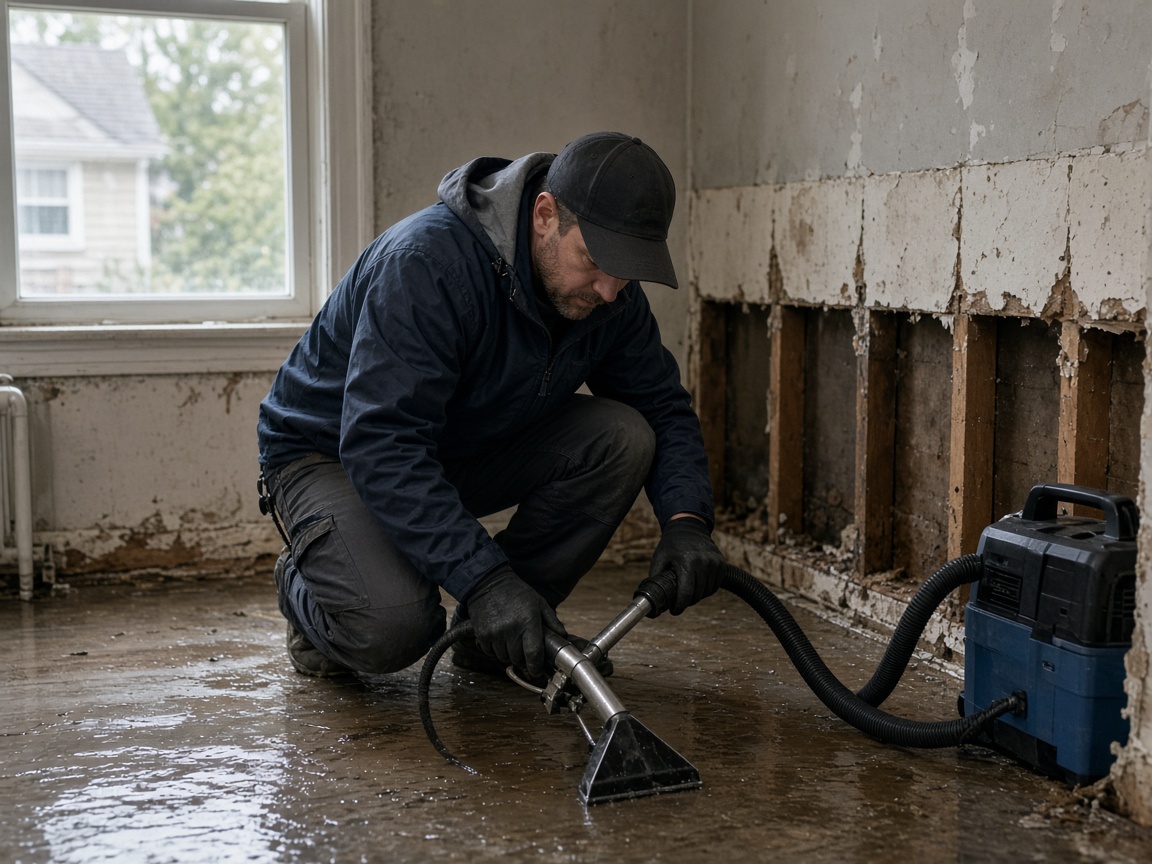
West Boylston homes near the Wachusett Reservoir often see water intrusion from rising groundwater after spring thaws and summer storms. Our crew based at 10 Pullman St responds directly to properties along Route 12 and Beaman Street where older foundations meet seasonal runoff. Cold winters bring frozen supply lines in attics and crawl spaces that burst when temperatures swing, requiring immediate extraction before mold sets in the humid continental air.
We map every job to the lot layout typical here: narrow driveways off Sterling Street or Maple Avenue, tight backyards abutting the reservoir buffer, and stone or block basements built before modern drainage. This means equipment must be carried in by hand rather than driven, and drying plans account for the heavy clay soils that hold moisture longer than upland lots in Shrewsbury or Auburn.
Owner-operated hours let us reach West Boylston addresses Monday through Friday 8am–6pm and Saturday mornings when weekend leaks are discovered. Every extraction and dehumidification sequence is adjusted for the actual construction we find on site rather than generic templates.
Around West Boylston
We regularly work near:
- 📍Wachusett Reservoir
- 📍West Boylston Middle High School
- 📍Major Edwards Elementary School
- 📍West Boylston Town Common
- 📍Beaman Street
- 📍Old Stone Church area
Water Damage Restoration in West Boylston — Local Notes
- •Stone foundations along the reservoir edge crack during freeze-thaw cycles, allowing water to enter at the footing line after snowmelt.
- •Many West Boylston homes on small lots have limited side access, so we stage drying equipment through basement windows instead of garage doors.
- •Heavy clay soils near Route 140 retain water after storms, extending drying times compared with the sandier lots farther east in Shrewsbury.
- •Attic pipe bursts are common in the 1950s–1970s capes and ranches here because original copper lines sit in uninsulated spaces exposed to deep winter cold.